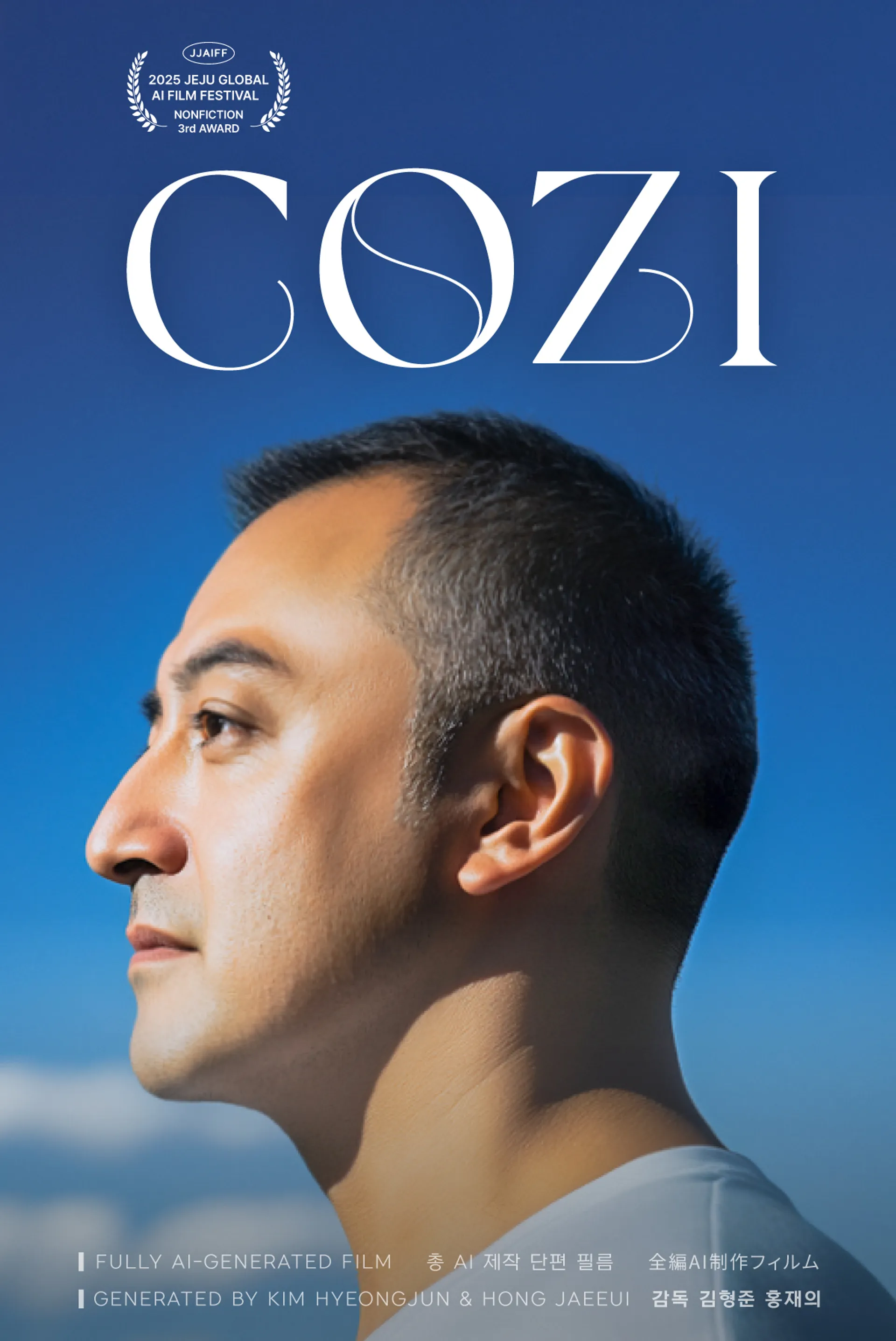
[ 2025JJAIFF Nonfiction 3rd ]
1930년대 후반 일제강점기 제주의 해녀들은 군수용 우뭇가사리를 채취하는데 동원되었다.
해방을 맞기까지 동원 혹은 생계를 위해 1500여명의 해녀들이 일본 물질에 나섰고 고향에 돌아온 이들도 있었지만, 일본에 남는 경우도 허다했다.
격동의 시대 속 타국의 먼 바다에서 억척스러운 삶을 영위한 그녀들을 기억하며
작품의 제목 " COZI "는
1) COZY ‘편안하고 아늑한’
2) 해안 돌출부인 ‘곶‘을 이르는 제주 방언 ’코지‘
3) 재일조선인 2세대 주인공 ‘코지’ 위 3가지 의미를 포함한다.
[시놉시스]
1985년 일본, 병든 어머니를 간병하는 재일조선인 2세 ‘코지’는 아버지를 앗아간 바다에서 계속해서 일을 하는 어머니를 이해하지 못한다. 차별과 핍박이 가득한 삶에서 어머니의 바다일을 계속해서 만류하지만, 그녀는 멈추지 않고 바다에 향했다. ‘코지’는 점차 바다는 고향과 연결된 유일한 공간이자, 상실을 이겨내는 방식이었음을, 거칠고 두려운 곳이 아닌 따듯하고 아늑한 곳이었음을 깨닫고 어머니를 이해하게 된다.
------------------------------------------------------------------------------
In the late 1930s, during the Japanese occupation of Korea, Jeju’s female divers (haenyeo) were mobilized to harvest agar weed for military supplies.
Over 1,500 haenyeo crossed the sea to Japan, driven by coercion or survival. Some eventually returned home, but many remained, continuing their lives in a foreign land.
This film is a tribute to those resilient women who endured and persevered in distant waters during a turbulent era.
The title, COZI, carries three meanings:
01. Cozy – warm, safe, and comforting
02. Koji – a Jeju dialect word for “coastal promontory,” where divers enter and leave the sea
03. Koji – the name of the film’s protagonist, a second-generation Korean-Japanese man navigating his mother’s memories and his own identity
[ Synopsis ]
Japan, 1985.
Koji, a second-generation Korean-Japanese man, cares for his ailing mother.
He cannot understand why she continues t